Showing posts with label The Philippines. Show all posts

Thursday, January 27, 2011

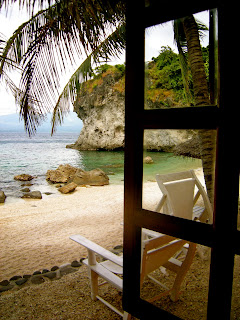
On why Apo island is a wondrous place

Traversing open seas to get there make you feel like the sea explorers of yore.

There’s nothing like the sound of the waves to wash all that city-bred fatigue away


Massive rock formations in the middle of the ocean demonstrate what happens when an irresistible force meets an immovable object


Rooms with a view in a place where electricity comes for but few hours every evening and no running water make you think about those things that you often take for granted


Stunning coves make you believe that you’re truly on a secret island


Grounded ships that make you feel happy to be marooned


Happy dogs that tell the tales of truly everlasting friendship


Sunsets that show you what those writers meant by sun-kissed waters


And colours that no photo-editing software can improve on


And the people who are just happy to be with themselves and stare at the restless sea


Monday, May 24, 2010

Close encounters of the Massive kind


When you read of lands that live under the shadows of smoking volcanoes and those that have seas inhabited by massive sea creatures, you might dismiss it as figments of a writer’s fertile imagination. But before you do that, I would suggest making a visit to Legaspi and Donsol in the Philippines. Here, there are sights beyond your comprehension, even after seeing them. Read that as the active volcano Mount Mayon, and the whale sharks that swim in the seas during the months of December to May.
My husband and I had wanted to explore the region for a long time now. We had even made the twelve hour long bus-ride to Donsol for a much awaited encounter with the whale sharks. Yet a Tsunami alert had banned us from the waters and we had returned disappointed. This time, we had caught a last minute flight in from Manila and had our fingers firmly crossed.
We started by hiring an All Terrain Vehicle or an ATV to follow Mount Mayon’s 2006 lava trail. The humongous tires ground pebbles firmly into the volcanic ash and made its way through streams up the trail. Driving through what was once a river and now a grey wasteland we reached a dead end, a 60 feet high wall of volcanic rocks. We clambered up loose sand, holding onto rocks and emerged to see the tops of coconut trees. We were standing on a sea of rocks that extended all the way to the crater. From July to October 2006, Mount Mayon had spewed fiery lava that had burnt all that stood in its path, which was mainly, the coconut farms in the area. It had slowly cooled down till this sea of rocks had been formed, as a memorial of sorts.
Yet, there is no sadder testament to the destruction that Mount Mayon has wreaked than the Cagsawa ruins that stand forlornly in the town. Seeing an ancient church tower that is the sole reminder of an entire town that was engulfed by an 1814 eruption of the volcano is indeed a sobering sight.
However, we had no time to dwell on past misfortunes as we made our way down a winding road to Donsol. This sleepy fishing town has now been dubbed the Whale Shark capital of the world.  We quickly registered at the Whale Shark interaction centre for the next day and were herded into the AV room to watch a video on the ‘Butandings’ as the whale sharks are called here. The video talked about how the whale sharks were the biggest fish in the world and that they grew up to forty feet or more and lived up to 150 years. It ensured us that there was no reason for alarm as these gentle giants only fed on plankton. That last part was reassuring to say the least.
To calm my nerves, we decided to head out on the ‘Burning bush’ tour.  This is the very imaginative yet apt name given to the firefly river cruise here. We settled down in a canoe to be slowly rowed up Donsol River that is lined on both sides by mangroves. As we looked on, certain trees lit up as if adorned by fairy lights. “Fireflies” our boatman told us in a hushed voice, as we watched entire trees flicker radiantly in the darkness.
The next morning, we were back at the Butanding interaction centre at 6:30 am. Within half an hour, our boat had left the shore. Thrilled on finally getting out there, my husband and I quietened down to listen to our Butanding guide’s instructions.  We would be taken around twenty minutes into the ocean. There was a whale shark spotter who would stand in front and instruct the boat on when to halt. By then we had to wear our snorkelling mask and fins, and sit on the edge of the boat. As soon as the guide yelled ‘Go’, we would jump into the water and swim behind him. 
As we neared the waters where the Butandings were said to flock, the spotter took his place. My heart was pounding uncontrollably. Suddenly he gestured with his hand and the boat’s motor was abruptly killed. “Ready, Go!” our guide called out. Before we knew it, we were jumping behind our guide into the open sea.
We jumped into the cold green water and swam after the guide.  As soon as I reached near him, he held my hand and said with urgency, “Look Ma’am! Look!” I instantly plunged my head into the sea. I could see nothing but murky water, when suddenly out of nowhere a huge head emerged. It was as wide as a double bed and was a dark grey adorned with a pattern of criss-crossing dots in shades of white and blue. It was my first encounter with a Butanding and it was swimming directly towards me. I panicked and jerked my head out of the water. Despite the video and photographs I had seen, nothing had prepared me for the sheer size of what was indisputably the biggest fish in the world. I wrenched my mask off, took in a deep gasp of air and then put it back on, to peer into the water again. To my astonishment the Butanding was still majestically swimming below me, swishing its forty feet long body gracefully as it dove to deeper waters.
We swam back to the boat only to make many more jumps through out the interaction. We ended up seeing nine Butandings in the course of an hour. We were very lucky our guide told us. I agreed with him wholeheartedly. But not just because of the number of whale sharks we saw, but because we had gotten the opportunity to intermingle with these magnificent creatures that taught you a thing or two about perspective. After all, once you’ve encountered a century old massive sea creature, you can no longer have illusions about the grandness of the human race.


New Indian Express, May'10

Sunday, March 21, 2010

Traipsing through the playground of the gods

‘Remember before you do anything on the mountain, you need to ask our ancestors’ permission! For you are on the land, that is their home in their afterlife.’

These were the surreal words that welcomed us, as we stood shivering more from anticipation than cold, at the foothills of Mount Pulag. The mountain is famous as the third highest in the Philippines and held in sacred esteem by the indigenous tribes like the Ibaloi. They believe, that this is where their native Gods live, rest and frolic thereby giving it the nickname of the “playground of the Gods”. The tribes also believe that the mountain is the final resting place for their souls.

We had travelled a sometimes winding, sometimes bumpy road all the way to the sleepy town of Benguet, where Mount Pulag is located. It was at the Department of Environment and Natural resources here, that we had been given a crash course on the mystique that surrounded the mountain. We had been expecting a difficult climb up to the almost ten thousand feet high summit, but now the air of mystery that surrounded it, made it all the more intriguing. Were we ready for it? A quick gulp of the pine-fresh mountain air and we knew we were.

Backpack strapped on and armed with a stout stick that I found at the beginning of the trail, I put my best foot forward. Our destination for the day was Campsite two, at the grasslands near the summit. At almost six and a half kilometres away, the trek up was certainly no walk in the park as my climbing group and me soon found out. The reddish-brown sandy trail wove its way through vegetable patches on one side and sheer drops overlooking lush valleys on the other. On and on we trudged, the occasional cold mountain breeze momentarily lightening the weight on our shoulders. As our steps grew heavier, the trail path grew narrower, till we reached a point where there was only space to keep one foot at a time, and that too sideways. Trying to ignore the feeling that our lungs were going to explode, we focussed on the sights on the way up to distract us.

Monstrous trees that seemed to be growing out of nowhere, bowing their heads over the path and weirdly shaped moss that would not have looked out of place on the ocean floor, bordered the trail. I peered through the gnarly trunks and the leaves of varying sizes and different shades of green, to catch a glimpse of Mount Pulag’s famed fauna. Yet neither a cloud rat nor a deer scurried past. Undeterred and with the promises of many a sight ahead, I hoisted my backpack a little higher and hiked on. Stumbling on slippery pebbles and stepping over natural springs that flowed over onto the path, onward we climbed, till we suddenly emerged into a clearing. People were already pitching their tents and there were collective sighs of relief. There, looming in the distance and looking over the proceedings below, was the summit. To me, the peak looked forbidding and inviting at the same time.

Now however it was time to throw down those backpacks and give our cramping muscles a much-needed break. It was half-past four in the evening and temperatures were already dipping fast. Pulling on our warm clothes, we explored the grasslands, snapping pictures of the mountain bathed in the soft orangeish- golden hue of the setting sun. As I settled down in my tent, with the moonlight streaming in, images of tribal ancestors drifted in to my mind. Firmly pushing them out, I curled up to sleep. Tomorrow would be a long day.

We were woken up at the almost unearthly hour of three in the morning. Teeth chattering in reaction to the sub-zero temperatures, despite the layers that I was wrapped in, I took my place in the long line that was ready for ‘Mission Summit Assault.’ We were told that it would take a little more than an hour and that it was to be single-file all the way. Though moonlight illuminated our path, our headlamps and torches helped quite a bit too as we half-trekked and half-stumbled our way up. And then somehow we had made it over the treacherously steep paths and we were standing on the summit.

Tired and half-numbed from the cold we looked at the hills that lay below. From just beyond it, a sliver of orange was cutting through the darkness in a straight line. The horizon was coming alive in front of our eyes. As the light spread across the skies, the clouds also rolled in, forming waves that covered the lower reaches of Mount Pulag from our view. We were witnessing the ‘Sea of clouds’ phenomenon that melted the pains of the trek away. We watched nature in all her glory, with the full moon continuing to look over the peak as the sun made its way up too. As the sunlight fell on the curves of the hills removing shadow after shadow, it was almost like the hills were stretching and shaking off their sleep. It was a silent group that made its way downhill after soaking up the sights at the summit. Nature does have a way of leaving even the most talkative of souls speechless.

Back at the campsite, the group was now taking its time to pack and wrap up. It was time to trek down, but no one seemed to want to leave. Mount Pulag had cast its spell over us. As everyone dawdled over his or her tasks, a sudden mist crept over the site, bringing a mild shower with it. And then stretching across the grasslands was a rainbow. I cannot imagine a more perfect ending to the adventure we had embarked on. As I peered at the summit standing proud as a background to the rainbow, I could not help but wonder whether this meant that the Gods of Pulag were smiling down at us.

New Indian Express, March 2010

Sunday, February 14, 2010

A taste of Island Life


‘When in Rome, do as the Romans do’ or rather when in the Philippines, holiday like the Filipinos do. This was our mission statement as my husband and I drove down some of the best roads in the country to one of the tips of the western coast of the Philippines. Our destination was the renowned virgin beaches of Bolinao that boasted of powdery white sand, lucid waters and a stunning coral reef. Though we had visited many beaches in the Philippines that claimed the same, this would be different. We planned to experience it, just as the locals do. As we parked our car in the beach facing resort we were to stay in, we realized that this was the perfect setting to do just that. Wooden huts with thatched roofs perched on reinforced stilts, overlooking the beach. And a jolly air about it that promised fun in the days to come.

We started off by sinking our teeth into the grilled island style chicken that was made on order, in the absence of a fixed menu. “We don’t believe in menus. You don’t have menus at home do you?” the resort owner Carol told us, already having taken us under her maternal wing. We nodded our agreement as we tucked in the sumptuous fare. Next on the agenda, was working it off with a walk on the beach. In Bolinao, this means trekking to where the waves are. The waves break around a kilometre away from the shore, because of the coral reef formation in the area. We walked through thick patches of sea grass, picking our way through sharp corals, taking care not to step on hermit crabs and the poisonous sea snakes that were slinking through the waters. Sidestepping the sea urchins that were lurking around limestone rocks, we finally faced the majesty of the waves of the South China Sea. As the salty sea water sprayed all around us, refreshing us beyond any spa treatment it became quite clear why beaches are an integral part of any Filipino holiday.

As we walked back to the shore, the sun was dissolving in shades of orange into the sky and we caught the first strains of high notes drifting from the resort. A bunch of holidayers were indulging in what was affectionately referred to as a national obsession – ‘Karaoke’. We watched as families sat under cabanas, a microphone in hand singing along to tunes made familiar through the ages. They sang sometimes high-pitched and sometimes out of tune. And though the singing was rarely of the highest quality, what was touching was the passion that came through song after song. It was that, which got us hooked, first with a slow tapping of our feet and later on by joining in. We then understood why travellers say that it is impossible to find a sulky looking Filipino, for after all, anyone who sings with his family, will surely always be smiling.

Being a nation of more than 7’100 islands, ‘Bangkas’ or native canoes are an integral part of the islander’s life here. Almost all families on the coast own boats. And our next step was to head to the vibrantly blue ‘Jo-Anne’ the resort owner’s motorized Bangka, to explore what was known as one of the cleanest rivers in the Philippines, the Balingasay River. The sun beating down on us, we crouched under a weather beaten umbrella for a bit as the boatmen insisted that, that was what the locals do. But we put it aside to brave the harsh rays, to take in the sights that the river offered us. Broad with sparkling clear waters, it was lined by mangroves and bamboo and coconut trees that swept the surface. With only the gentle put putting of the Bangka’s motor as background, we watched the locals’ row their way through their daily business. With kingfishers dotting the tree branches and the occasional glimpse of translucent fishes swimming alongside the boat, it was easy to see why many people gave up the city life in favour of this. As we had ventured out at noon, the river was at low tide and the boatman had to turn the Bangka back. Yet the shore was not what he had in mind for us. Onward he steered the Bangka, till our little boat hit the rippling waters of the sea. Zigzagging amidst fishing dinghies he anchored a few metres away from a sparsely populated beach. He jumped out and waded into the clear waters only to show us a pool with a sandy bottom in the middle of the reef. “Natural swimming pool Ma’am Sir,” he said beaming, indicating that we too should join the boisterous and bronze tanned native children in the waters. We dived into the sea to the accompaniment of peals of laughter from the children at seeing the foreigners join them in their watery playground. A happy hour of splashing about and the discovery of a starfish later, we were on our way back waving at our newfound friends till the waves hid them from view.

Once on shore, we found ourselves with twenty minutes to head to the local sunset viewing deck. We raced our car up and down the part concrete and part dust roads to the Cape Bolinao lighthouse. Perched on a cliff overlooking the coast, this is the second tallest lighthouse in the country. Watching the sun, a huge sphere of glowing red and orange as it slowly descended into the sea, I was reminded of the sunset drawings I attempted as a child. The sight left me speechless.

And suddenly it was time for the last dinner. We decided on Chicken adobo, a simple dish that is all Filipino, with a vinegar and soya sauce base and a dash of seasoning that plays to your senses. Uncomplicated but delicious! In a sense, the dish summed up the holiday for me, living the unfussy island lifestyle that was spiced up by finding joy in the simple daily things that you do.

New Indian Express, February 14, 2010

Wednesday, October 7, 2009

Of underground expeditions and hiking in the clouds


Each sharp bend in the winding mountain road was heightening our sense of anticipation. Our destination was Sagada, a must-go for adventure seekers and adrenaline junkies, located high up in the mountain province of the Philippines. The journey had taken us sixteen hours from Manila and the twelve of us who had been on the road were waiting to set foot onto the mountain township. Its not like the journey had been any less exciting though. Lining the long and winding road were the famed rice terraces that are centuries old. These terraces have the distinction of being on the UNESCO world heritage site list. Built by the Ifugao tribe for their own community, the terraces are a spectacular sight. For as far as we could see, the mountains around us had been carved into large rice fields that looked like massive amphitheatres. It was in awe-struck silence and with our eyes fixed on these man-made structures that we made our way up to the sleepy town of Sagada nestled in the Cordilleras mountain range.

Scarcely had we taken in the mild wintery feel and the cool mountain breeze, that it was time to head to yet another site Sagada was famous for. Its limestone caves that form a crisscrossing network deep underneath the mountain town. Our group was being taken on a cave connection adventure. This meant that we would be doing some hard-core spelunking to get to the tourist friendly Sumaguing cave that was known for its limestone formations. Our entry point was the lesser-known Lumiang cave. Once used as a burial cave, even today massive pinewood coffins mark the entrance and set the foreboding tone for the rest of the adventure. Local guides who led the way with Petromax lanterns accompanied our group in our descent to the bowels of the earth. “This cave is only 100 metres deep while Sumaguing is around 163 metres, ” the head guide told us in a hearty manner. Not sure whether the information was vital to my survival, with a slightly pounding heart, I took my first step into the depths of the clammy cave. And within a few minutes, I knew that there was no training or information that could have prepared me for this underground expedition.

Cold and moist to the touch, the cave is filled with narrow claustrophobic spaces that you have to squeeze through to move forward. Right hand clutching onto a rock above ones head, left in another crevice, right foot firmly placed on a largish rock while the left foot dangles in space looking for a foothold. As the hours went by our movements started to have a distinct rhythm, ‘Stumble, grasp, clutch and slide’. As we moved closer and closer to the second cave the terrain changed from rocky to muddy. Left with lone rocks to clutch onto, more and more of us found ourselves clambering up clay slopes, slipping and sliding all the way. With the help of ropes and the will power to see daylight again, and to the accompaniment of the shrill shrieks of the thousands of bats that inhabited the caves, we ploughed on. When suddenly, we stopped in our tracks to see the breathtaking sight that made it all worthwhile. This was Sagada’s underground river, the force that had shaped these limestone caves and the formations inside, over thousands of years. We had to wade through the bone-chilling, crystal clear waters to exit the caves. At the end of five and a half hours, it was a dirt and bat dropping encrusted group that emerged into the open air with shaky knees and scrapes galore. And yet what we had seen and experienced made all the aches and pains, pale in comparison.

The next day at the break of dawn, we trooped up Kiltepan viewpoint to catch the first sunrays touch Sagada. And true to its reputation, the sight of the sun breaking through the clouds and bathing Sagada in its mild orange hue was stunning. After watching Sagada wake up, we headed towards our next challenge, a one and a half hour trek to the biggest falls in the area Bomod-Ok. We hiked along rice terraces, across streams and through small village settlements. Even with the occasional stop on the way to take pictures, it was not long before the waterfalls came into view. Cascading from a height of almost two hundred feet, we felt the cold spray from the falls temptingly dust our skin. It was all the invitation we needed to unload our backpacks and dive into the ice-cold waters. It was a thoroughly refreshed group that made their way back the mountainside to call it a day.

We all woke up with a twinge of sadness on the last day, as in a few hours it would be time to head back to Manila. But even then there was no time to dwell on it, as there were places to see and experience before we left. First stop was the St Mary’s Episcopal church the oldest in the mountain province. After a few moments of peaceful contemplation inside the calm, stone structure it was time to hike across the Cavalry hills to the Echo valley. Cupping our hands we shouted out syllable after syllable and waited for the valley to obligingly repeat our words. And then came the final destination, Sagada’s centuries old living tradition of the Hanging Coffins. Perched precariously on the Sagada’s limestone cliffs, these coffins dot the landscape, with the oldest coffin being centuries old, while the latest just a few weeks.

To me, Sagada was a kaleidoscope of experiences that are mystical and overwhelming. And while we kept our faces to the window for the last glimpses of the township, I realized that what one of my fellow travelers had told me at the beginning of the trip was indeed true. “If this is your first visit here,” he had said, “Be warned, for Sagada is addictive!”

Friday, September 4, 2009

Road trip to Camayan- A photo essay

Clear skies and a sunny day after ages was what prompted us to hit the roads from Manila, on a Saturday morning in the direction of Subic. At a distance of around 150 kilometres, this is where some of the beaches that are closest to Manila are. Our destination was the Camayan beach resort, known for its beach front rooms and pristine beach. However the fun started way before we actually reached Camayaan. The less than two hour drive from Manila to Subic is via some of the best and scenic roads in the nation. The scenery ranges from the Lahar flow from the 1991 Mt Pinatubo eruption to the SCTEX highway itself that has been made by literally, cutting through mountains.


Though Subic is known for its free port, the place is not in any way limited by beaches alone. The abundant forests in the area have also led to a number of tree-top adventure parks as well as Jungle Safari parks. Though we were headed to the beach, I managed to click a few forest giants that seemed to be stepping out of their green abode, ‘a la talking trees of the Lord of the Rings Style’


Camayan wharf is at the end of this gorgeous, winding road. Huge mangroves that make up a natural sheltered path on the beach line the shore. The perfect place to relax after a swim. We also took our time on the shore clicking what seemed to be the strangest flowers that we saw strewn all around the sand. If any of you know what these flowers are called, do drop in a line. We’ve been unable to figure out so far.


And what’s a better way to end a day on the beach than lapping up the sound of waves while enjoying some great food and cocktails on a tastefully lit restaurant on the seaside. All in all, Camayan is proof that you don’t have to go a long way from home for some rest and rejuvenation.